Female-Led Plastic Action Projects Powering Change This International Women’s Day
Publish Date: March 3, 2026
Last Update: September 16, 2026
This International Women’s Day, we’re proud to spotlight two women-led waste recovery projects supported through our partnership with rePurpose Global, an organization dedicated to building impactful, community-driven solutions to plastic pollution around the world.
Through this partnership, Thrive Market has achieved Plastic Neutral Certification by funding verified recovery projects that help remove plastic waste from the environment while investing in local infrastructure, fair wages, and long-term economic opportunity. Together, we’re working to ensure that plastic waste is intercepted before it reaches our oceans and that the people leading this work are supported, skilled, and empowered.
Why Women-Led Climate Action Matters
Around the world, women are disproportionately impacted by environmental issues, yet they are also leading some of the most effective, community-based climate solutions.
Projects like Hara Kal and Nuevo Ciclo show that addressing plastic pollution and gender inequality can (and should) happen together. By investing in women-led systems, we’re helping create safer coastlines, stronger local economies, and long-term infrastructure that benefits entire communities.
At Thrive Market, our goal is to make healthy living easy and affordable for everyone. Through our partnership with rePurpose Global, members help support verified recovery projects that prioritize both environmental progress and social equity.
This International Women’s Day, we’re celebrating the women who are proving that climate action and community empowerment go hand in hand—and we’re grateful to be part of that work together. Below, we’re highlighting two rePurpose Global plastic action projects where women are not just participants, but leaders.
Project Hara Kal: Women at the Front Lines of Ocean-Bound Plastic Recovery
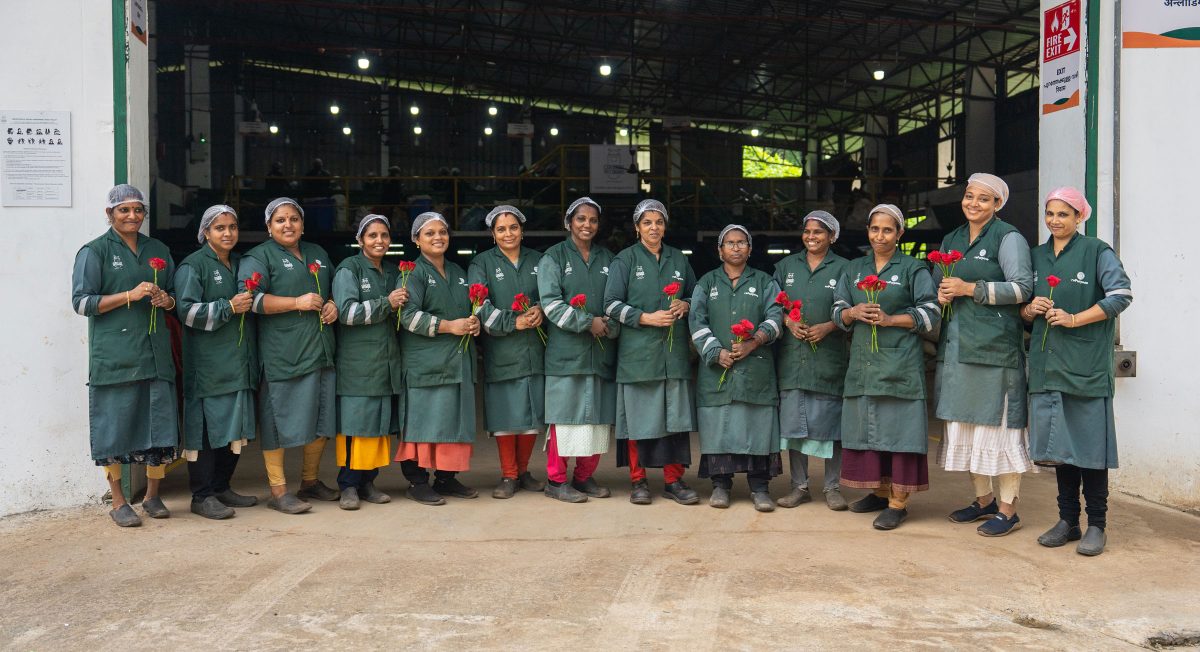
In Kerala, India, coastal litter levels are three times the global average and economic opportunity for women remains limited. Only 21% of women in the state are employed, and the gender pay gap is among the highest in the country.
Project Hara Kal is helping to change that.
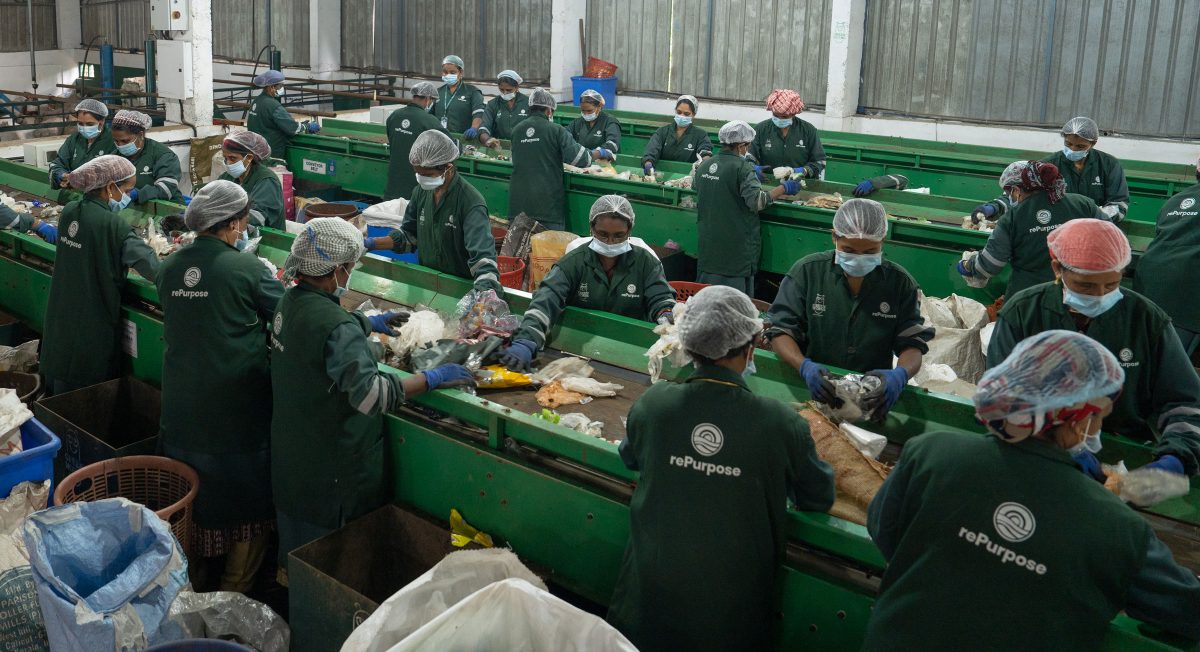
This women-led initiative—powered by a workforce that is 98.5% women—collaborates with local women’s groups to conduct “first-mile” waste collection. That means intercepting low-value plastic before it reaches waterways and the ocean, especially in areas where home collection systems were previously inconsistent or unavailable.
Through a public-private partnership model, local women are upskilled in waste collection and sorting, increasing recovery rates while creating reliable income opportunities. The project also ensures materials are transported to the most appropriate end-of-life destination, preventing leakage back into the environment.
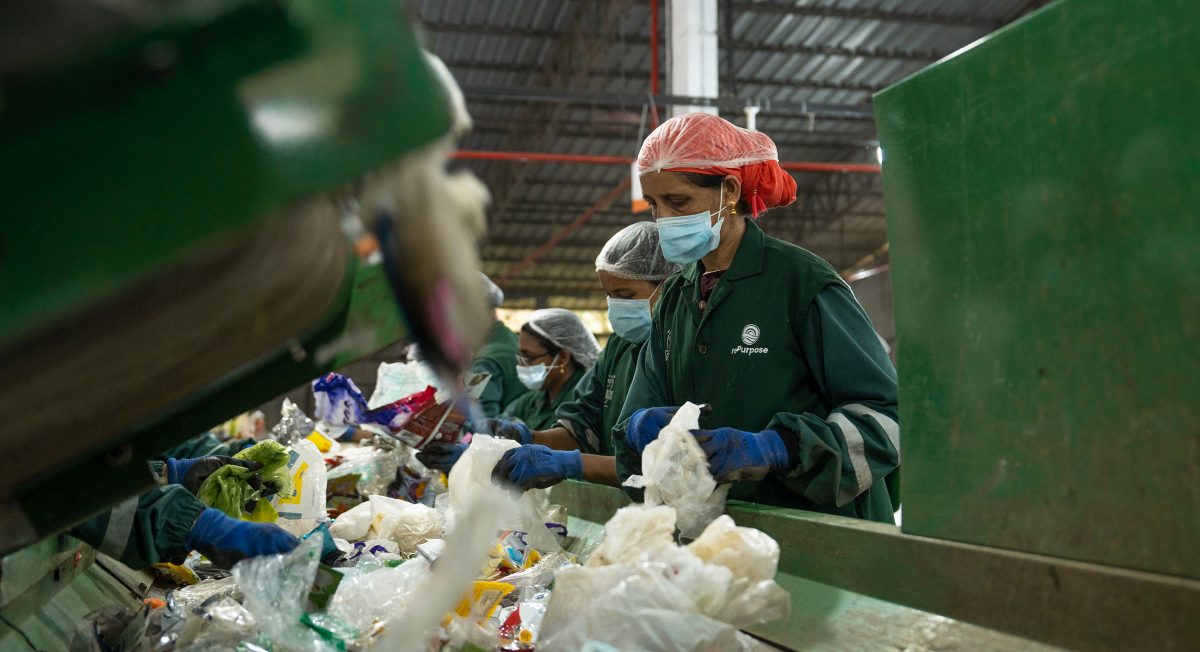
Through Project Hara Kal, we’ve been able to help recover 1,586,465.434 pounds of plastic — equivalent to:
- 1,716,954,762 disposable plastic straws
- 120,186,833 plastic shipping bags
- 40,062,278 500 ml PET bottles
- 46,826,039 100 ml HDPE shampoo bottles
Behind every pound of plastic recovered is a woman building skills, earning income, and strengthening her community.
Project Nuevo Ciclo: Building Community with Recycled Plastic
In Medellin, Colombia, Project Nuevo Ciclo is demonstrating how plastic recovery can directly fuel community development.
Led on the ground by rePurpose Global’s impact partner “Botellas de Amor” (Bottles of Love), which is co-founded and operationally led by a woman named Kelly Rodriguez, the project transforms recovered plastic into durable construction materials for community infrastructure like schools and playgrounds.
With Thrive Market’s support, Project Nuevo Ciclo has helped recover 10,686 pounds of plastic, equivalent to:
- 11,564,286 disposable plastic straws
- 809,500 plastic shipping bags
- 269,833 500 ml PET bottles
- 315,390 100 ml HDPE shampoo bottles
But the impact doesn’t stop at recovery.
In 2025 alone, Nuevo Ciclo supported 13 community projects, including 11 playgrounds, 1 library, and two homes built for local residents. One of those homes was constructed for a senior woman named Erminia, using recycled plastic materials. Construction began in late spring, and Erminia’s home was completed in December—a milestone made possible through collective action.