3 Recipes to Help You Use Up the Whole Cabbage
Publish Date: January 21, 2026
Last Update: January 23, 2026
My appreciation for the humble cabbage is a quiet one.
Like many kids, I didn’t appreciate vegetables growing up. My family never pressured me to eat vegetables, though I knew that they wanted me to like them. After a full shift at the pharmacy, my mother would come home and craft various Korean foods for the family to eat: stews and stir-fries overflowed with cabbages, onions, daikon, and potatoes. It took me a long time to want to eat that food.
How many meals did I take for granted because I was picky? Because I lacked curiosity?
Today, my appreciation for cabbage may not be ecstatic, but it’s one of the foods I return to often. I remember eating sukiyaki with my sister and brother-in-law in Japan. Napa cabbage, cut in chunks, lightly braised in a sweet and savory soy broth, was then dunked into whisked raw egg yolk.
I remember shredding up cabbage for a coleslaw I made at church, mixing it with mayo, apple cider vinegar, and black pepper to accompany the pulled pork some other family made.
Cabbage is so dear to me that the first meal I cooked and ate after moving out from my parents’ house was a seared cabbage over hot, white rice.
Nowadays, I get excited to eat cabbage because I know what good cabbages taste like. Perhaps growing older is learning about how to be more open, to be more porous. I could find even the most seemingly normal, humble head of cabbage absolutely delicious.
What is cabbage?
Cabbage belongs to the brassica (also known as cruciferous) family of vegetables. Characterized by their strong stalks and hearty leaves, brassicae, including cabbages, cauliflower, broccoli, radishes, and rutabagas, can withstand growing in colder climates. For cultures where refrigeration was scant, cabbages became a popular vegetable in the wintertime. Cabbages sprinkled and massaged with salt became pickles and sauerkraut and kimchi. Cabbages, cut and boiled in water or stock, became soups and stews.
How do you eat cabbage?
Cabbage is wonderful for eating both raw and cooked.
When raw, the leaves maintain their structure and crunch. It’s a very approachable and adaptable vegetable to prep. Slicing a cabbage thin or flat maximizes the surface area of the vegetable – for coating in dressings and marinades or even searing on a hot pan, creating savory flavors that rival steaks.
On the other hand, when cooked down, the cabbage leaves become porous, inviting soup, broths, and other liquids to flavor it from within. This porousness makes the cabbage perfect for brining and pickling, steaming and braising.
Crunchy Cabbage, Apple and Ginger Slaw Recipe
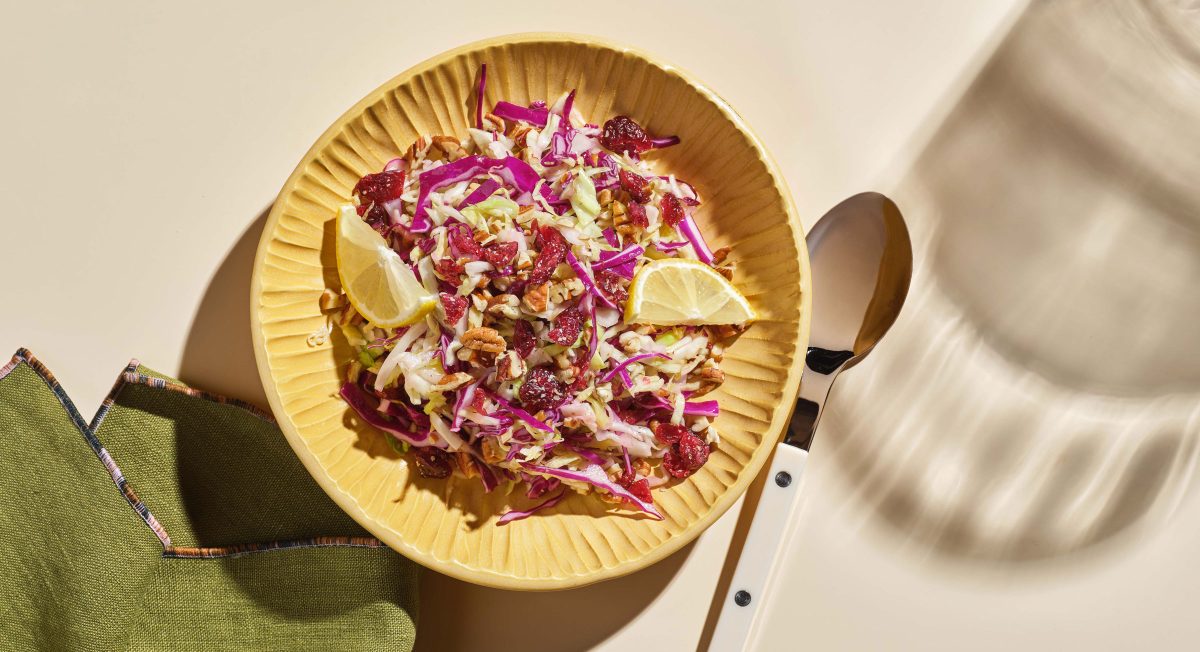
Slicing the cabbage up thinly not only creates a delightfully crunchy texture, but it also allows the cabbage to be fully coated by the zippy, refreshing dressing. Red and green cabbage can be used interchangeably in most, if not all, recipes; varying the color here makes this a table-worthy accompaniment for any barbecue or picnic.
Yield: 6 servings
Active Time: 15 minutes
Total Time: 30 minutes
Ingredients
1 ½ tbsp Thrive Market Apple Cider Vinegar
1 ½ tbsp Thrive Market Extra Virgin Olive Oil
½ lemon, juiced
¾ tsp kosher salt
¼ tsp ground black pepper
1 tsp Thrive Market Stoneground Mustard
1 ½ tsp fresh ginger, grated or minced finely
2 tsp Thrive Market Maple Syrup
½ small green cabbage
½ small red cabbage
2 green apples
½ cup Thrive Market Organic Pecans, toasted and chopped
½ cup Thrive Market Organic Dried Cranberries, chopped
Instructions
Prepare the dressing: add apple cider vinegar, olive oil, and lemon juice to a large bowl. Whisk to combine. Add the salt, pepper, mustard, maple syrup, and ginger and whisk until emulsified. Taste and adjust as needed.
Slice the cabbage pieces into very thin pieces (or use a mandolin). Add to the bowl with the prepared dressing. Toss the cabbage and dressing together, give it a good massage and set aside.
Peel and core the apples and slice into thin matchsticks (Tip: to prevent browning, squeeze some extra lemon juice over them).
Add the apples, chopped pecans, and chopped cranberries to the cabbage mixture. Toss to combine.
Cover the cabbage and chill for 30 minutes to let the flavors meld. Serve as a side, or with cooked sausages to make a complete meal.
Cabbage Steaks with Miso Butter Recipe
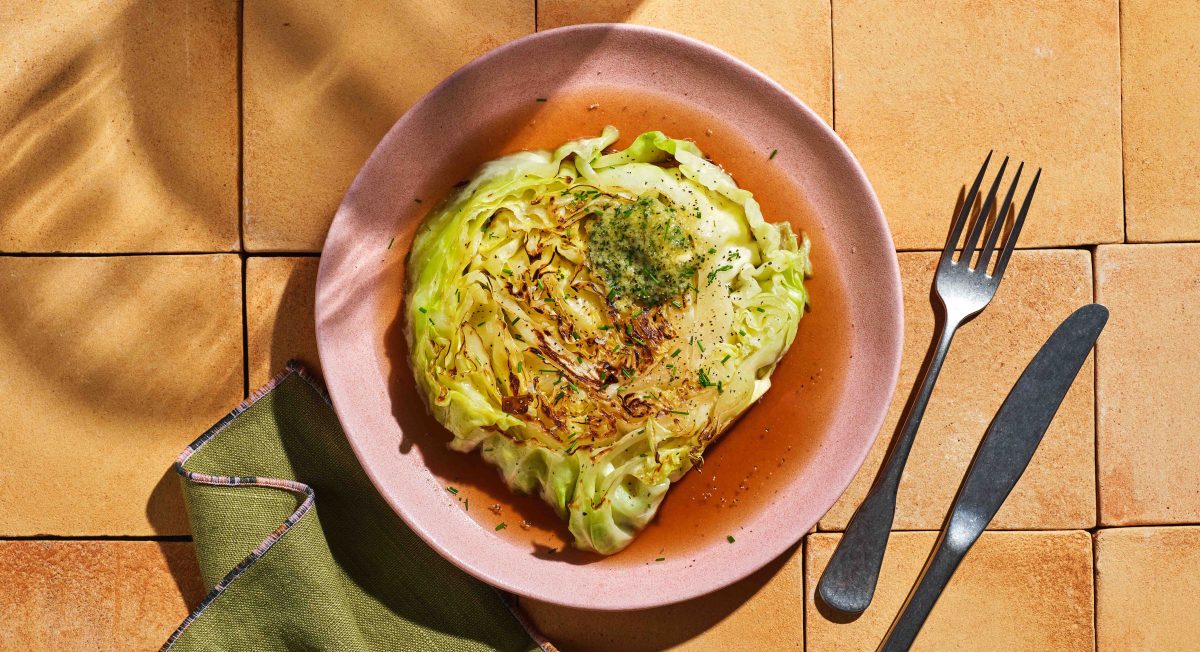
Cabbage can be as rich and delicious as a steak! Savory, smoky flavors that come from a good pan-sear are locked in before the rest of the vegetable is gently cooked via braise. Just keep an eye on the pan; over-cooked cabbage can taste sulfurous and stinky. The sweet spot is for the cabbage to be soft, but still keep its structural integrity.
Yield: 3 servings
Active Time: 10 minutes
Total Time: 20 minutes
Ingredients
1 head green cabbage
2 tbsp Thrive Market Grapeseed Oil
2 garlic cloves, minced (or 1 tsp garlic paste)
½ tsp salt
¼ tsp ground black pepper
4 tbsp unsalted butter, softened
2 tbsp chives, chopped
1 tbsp Thrive Market Organic Brown Miso Paste
⅓ cup Thrive Market Organic Vegetable Broth
Extra chopped chives, for garnish
Instructions
Slice 1 ½-inch “steaks” from the head of cabbage, keeping the layers intact. Save the outer cheeks for another use.
Combine the grapeseed oil, minced garlic, salt, and pepper in a small bowl. Brush the oil mixture on both sides of the cauliflower steaks.
Heat a large skillet or frying pan over medium-high heat for 2 minutes. Add one of the cabbage steaks and sear for 3 to 4 minutes, seasoning with salt and pepper.
Flip the cabbage and sear for another 3 to 4 minutes, until browned. Repeat with remaining pieces of cabbage.
Add the vegetable broth to the skillet, with all of the seared cabbage. Cover and cook for 5 to 10 minutes on low, until the cabbage is tender but not falling apart.
Meanwhile, make the compound butter: stir together the softened butter, chives, and miso paste. Season with salt and pepper and set aside.
Serve the cabbage steaks hot with miso butter on the side, and spoon over some of the broth from the skillet. Enjoy!
Napa Cabbage Rolls with Shrimp Recipe
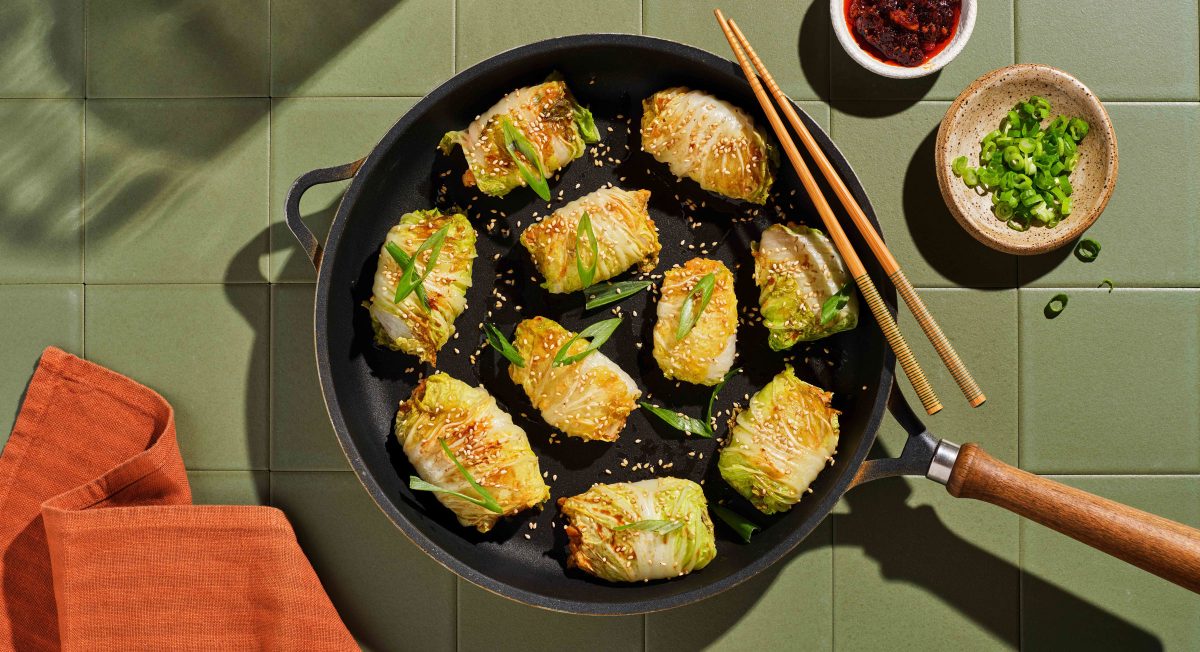
This is a recipe from Jeff Chan, the Art Director of Design and Organic Social at Thrive Market. Specifically, this was adapted from his grandmother’s recipe. Blanching the cabbage softens it, making it pliable enough to be rolled.
Yield: 4 servings
Active Time: 15 minutes
Total Time: 35 minutes
Ingredients
10 Napa cabbage leaves
3 green onions, sliced
3 cloves of garlic, minced
1 medium carrot, grated
1lb raw shrimp, minced
3/4 tbsp sesame oil
2 tbsp Thrive Market Organic Soy Sauce
1/2 tbsp Thrive Market Organic Cane Sugar (or alt sweetener of choice)
1 tsp Thrive Market Organic Black Peppercorns
1 tsp cornstarch
Neutral oil, like olive or algae
Instructions
Boil the cabbage in a large pot of water, blanching for twenty seconds max. Transfer to a bowl of ice-cold water. The goal is to soften the cabbage, instead of cooking it.
In a bowl, combine the rest of the ingredients until a paste forms. Lay the cooled napa cabbage leaves flat on the cutting board and add roughly a tablespoon and a half of the shrimp mix towards the bottom of the cabbage. Roll the cabbage up like a towel, enveloping the shrimp mixture with the leaf.
Add a tablespoon of vegetable oil to a pan on medium heat. When the oil shimmers and moves like water, sear off the cabbage rolls. When the cabbage is browned, the shrimp mixture turns opaque, and the entire kitchen smells amazing, remove the rolls from the pan. Serve immediately!