How Lundberg Family Farms Is Growing a Regenerative Future
Publish Date: November 20, 2025
Last Update: April 8, 2026
Leave the land better than you found it.
It’s a guiding principle that the Lundberg family of farmers has lived by for generations, ever since great-grandfather Albert Lundberg moved to California in the 1930s.
Today, Lundberg Family Farms grows organic rice in much the same way that their ancestors did, with a reverence for the land and a deep understanding of how to get the best out of it.
Brita Lundberg, a fourth-generation farmer and Chief Storyteller at Lundberg Family Farms sees the Lundberg legacy as more than just rice: it’s a testament to generations of environmental stewardship, collaboration, and storytelling. “I just couldn’t wrap my head around the fact that future generations of my family wouldn’t know the stories that I heard around my grandparents’ kitchen table when I was growing up,” Brita says. “Stories are what keep us together. And in so many ways, the story of our farm is what has kept our family together.”
The Route From Dust Bowl to Regeneration

In 1937, Albert and Frances Lundberg left their farm in Nebraska to escape the Dust Bowl, a period of severe drought and dust storms that overtook the Great Plains as a result of poor farming practices. Stripping the land caused massive erosion of the region’s topsoil, killing cropsand livestock and forcing people to migrate away from the overwhelming dust. Brita recalls her great-grandmother Frances’s stories of sealing the windows with wet rags to keep out the dry, dirty air.
It was one of the worst man-made ecological disasters in American history, and the catalyst for a new way of thinking for the early Lundbergs. As they made their way west with their four sons, a tractor, and a truck, Albert and Frances imagined a better future for farming.
Once they arrived in Richvale, California, a town in the Sacramento Valley region of Northern California known for its wetlands, the Lundbergs began farming rice with a new commitment to preserving the health of the soil. Brita describes Albert as having a “PhD in common sense,” guided by intuition, observation, and respect for the land. This mindset led to early soil stewardship practices, such as turning rice straw back into the soil instead of burning it. “In the 1930s and 1940s, it was common to just take a match and light up the straw, filling the valley with smoke,” Brita says. “Instead, my great-grandpa Albert said, ‘The straw came from the soil, it’s going to go back to the soil’.”
The Birth of an Organic Movement
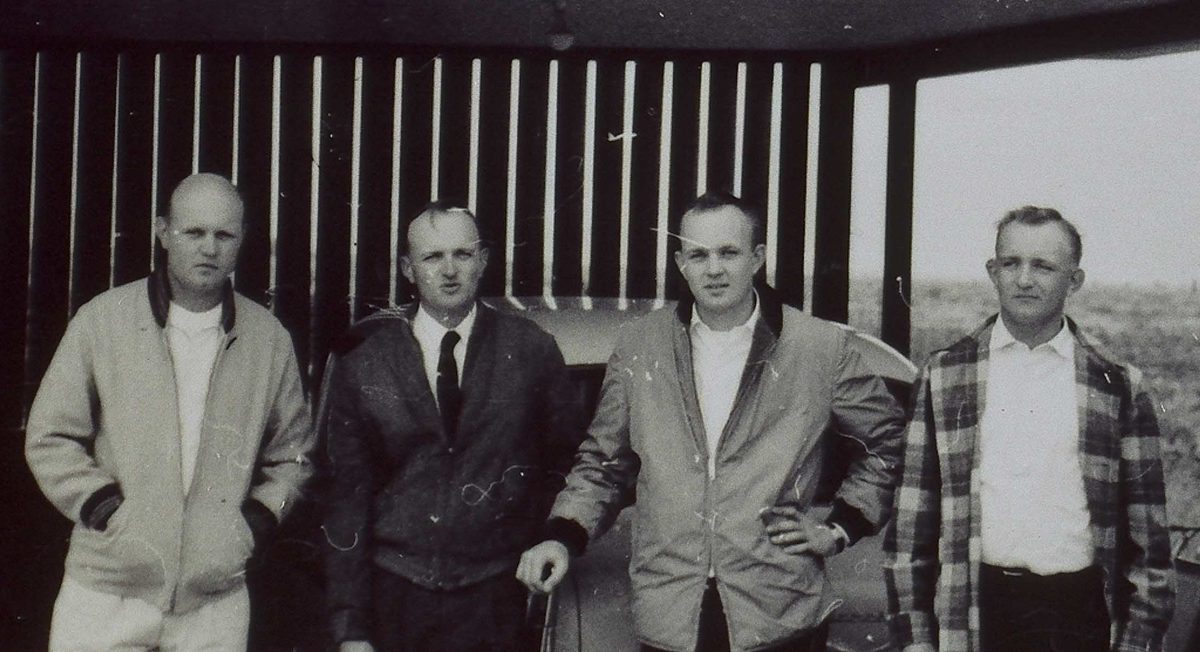
In the 1960s, Frances and Albert’s four sons, Eldon, Wendell, Harlan, and Homer, started growing rice organically, still many years before it would become mainstream.
In 1969, a natural foods company approached more than 100 of the area’s rice farmers, asking them to grow organic brown rice. While the others refused, thinking organic farming too tedious and unconventional, the Lundbergs were intrigued, guided by their father’s belief in holistic farming practices. “It was still the very early days of the organic movement,” Brita says. “They had to ask something like 150 farmers in the region, and they all said no, you’re crazy—but the Lundberg brothers were just crazy enough to say yes.”
The Lundbergs contacted J.I. and Robert Rodale of Organic Gardening magazine for guidance. Soon, they became so interested in organic farming as a concept that in 1973, they became founding members of California Certified Organic Farmers (CCOF), nearly 30 years before USDA Organic standards existed.
When it was eventually time to attempt to sell their organic brown rice, the Lundberg brothers bought an old bread truck, filled the back with bags of rice stenciled with the Lundberg name, and hired a driver to stop at health food stores along the coast from California to Washington. There was a market for this new, chemical-free brown rice, fueled by those who were interested in their health and the health of the planet. Brita’s great-uncle Wendell joked that they started getting orders from “long-haired hippies who filled their VW buses with rice.”
“It was a little bit like, right place, right time, you know?” she says with a smile.
From Organic Farming to Regenerative Organic Certified
In 2018, more than four decades after the Lundberg brothers first dipped that first shovel into organic farming, the Regenerative Organic Certification (ROC) officially launched. It was developed by the Regenerative Organic Alliance (ROA), a nonprofit founded by Dr. Bronner’s, Patagonia, and the Rodale Institute to formally create criteria to define regenerative agriculture.
Regenerative organic goes beyond organic; it’s a holistic system that not only leaves harmful chemicals out of food and farming, but actually uses farming techniques that regenerate the land—leaving the land better, just like Albert Lundberg said.
“ROC uses USDA Organic as a baseline, and then adds important criteria for soil health, animal welfare, and social fairness,” Brita says. “It’s this beautiful certification that represents the interconnectedness of everything; that food isn’t produced in a vacuum. It impacts soil health, which impacts planetary health and human health and the health of our communities and the creatures who call our fields home.”
Taste the Difference: Rice Grown With Care
The most common type of rice grown in California is Calrose, which makes up nearly 90% of the state’s crop. Most farmers spray their fields of Calrose with herbicides and pesticides to mitigate the grass and aquatic weeds. “In our regenerative organic fields, we’re not doing that,” Brita says.
Instead, Lundberg Family Farms employs regenerative practices like deep-water flooding to drown the grass weeds and drying fields for up to 30 days to control aquatic weeds. The Lundbergs even develop their own rice varieties that thrive under regenerative conditions—without chemical herbicides—and have a uniquely delicious taste.
“We have to develop a lot of our own varieties that are compatible with those regenerative organic farming practices,” Brita explains. “Starting from the seed, we are looking for varieties that are not only good for people, but also good for the planet.” Thanks to their holistic farming practices, the Lundbergs can seek out rice varieties far beyond the typical Calrose, always prioritizing rice varieties that taste delicious, have a pleasant texture, and can be used in many types of home cooking. The “rice doctors” at Lundberg Family Farms use natural breeding techniques to create new rice varieties by means of hand cross pollination, which mimics the process carried out in nature by pollinating insects and animals. “There’s no genetic engineering or bio-technology involved,” Brita says. “We use old-fashioned plant breeding methods. It’s like Gregor Mendl with the peas, pollination, or matchmaking.”
Currently, the Lundbergs grow 17 different varieties of rice on their farm in Northern California, but over the past 10 years, they’ve trialed over 80,000 unique breeding lines. Each variety of rice must be harvested at a specific time. Because all rice starts out as brown rice, the milling process then determines whether each type stays brown rice or becomes white rice.
One standout rice variety, the Black Pearl Rice, has a dark purple color that’s tied to the presence of anthocyanin antioxidants, like you would find in blackberries or blueberries. Lundberg Family Farms developed this variety so it doesn’t have the bitter, overwhelmingly earthy flavor of other black rices. “Ours has a smooth flavor and a nice chewy texture,” Brita says. It’s this type of painstaking experimentation and attention to detail that sets Lundberg Family Farms apart from other rice growers: they consider every part of the growing process, from their farm all the way to your fork.
Brita compares the end result to home cooking. “We all know that a homemade cake tastes better than a store-bought one, and it’s hard to put your finger on why,” she says. “Is it because of the quality of the ingredients, or is it because of the care that has gone into it every step of the way? We like to think it might be both.”
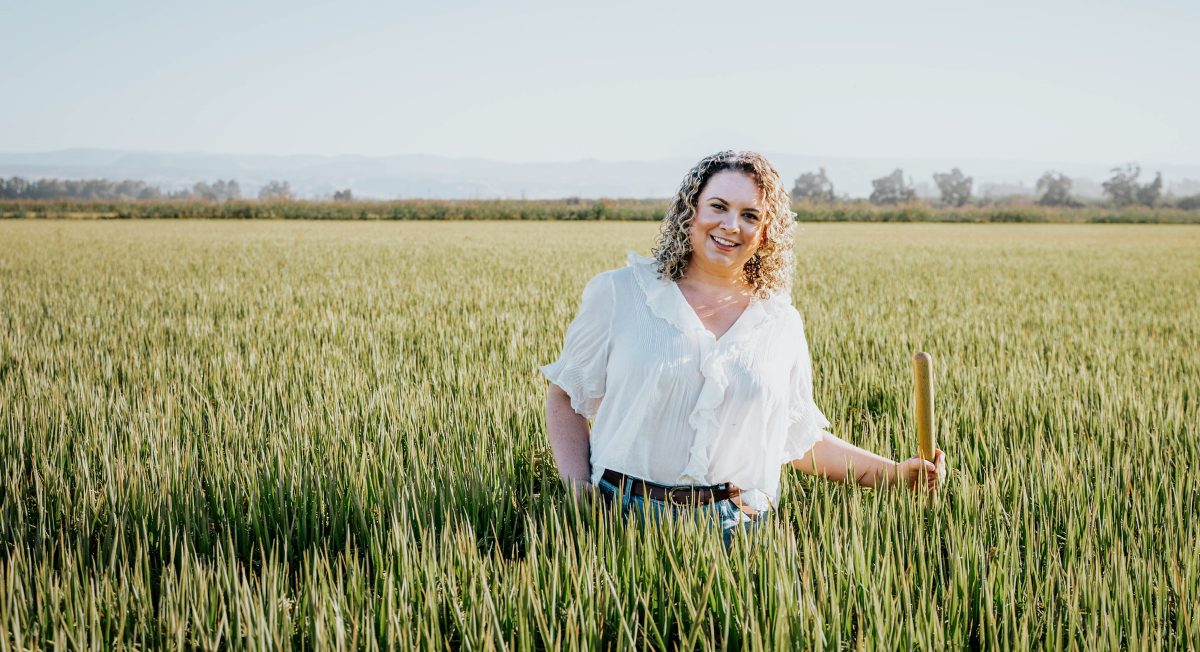
Nurturing More Than Just Rice
The Lundberg farm lies on the Pacific Flyway, a major north–south flyway for migratory birds that extends from Alaska to Patagonia. Over the years, the family has started to consider how their regenerative farming practices can also support migratory birds like ducks, geese, and sandhill cranes.
“I like to call it quacktivism,” Brita jokes.
Winter cover crops on the farm provide nesting habitat for these migratory birds, many of which have lost their own natural breeding habitats. Just before planting season, the family also partners with the California Waterfowl Association to locate any eggs that may have been laid in the fields and rescue them by hand. Then, they transfer them to a local hatchery to be incubated, hatched, raised to about five weeks of age, and then released back into the wild.
Hope—A Verb With Its Sleeves Rolled Up
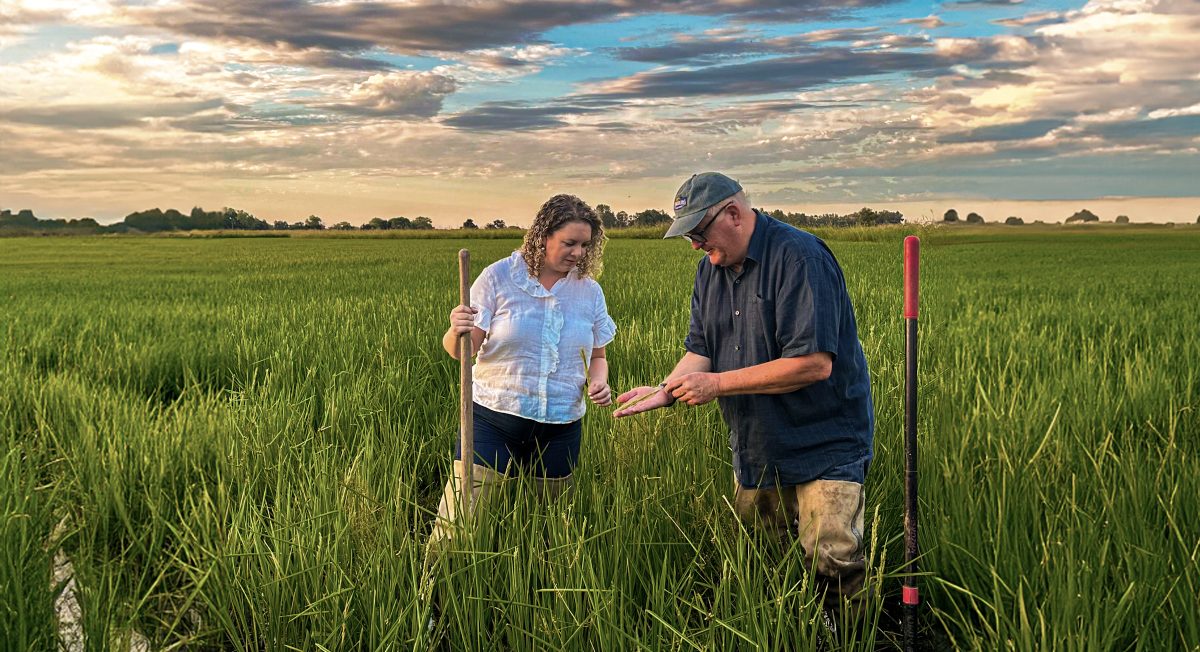
Most days, Brita and her father spend hours together in the rice fields. They check out the rice, the birds, the deer; they talk about the state of the farm, its past and its future.
Brita’s father has a unique philosophy: Hope is not a strategy. “He’s kind of a philosopher farmer,” she says. “I don’t think he says this because he’s not a hopeful guy. He talks about how farming is inherently hopeful, that you plant a seed because you have hope that it will grow into something bigger.”
Brita expands on her father’s words, saying they remind her of renowned environmentalist and professor David Orr, who said, “Hope is a verb with its sleeves rolled up.” Organic farming, regenerative agriculture, and issues like climate change—these all require constant commitment, action, and advocacy. They also require a new way of thinking, which, luckily, is something that the Lundbergs have never shied away from.
“We have to hope for a regenerative, organic future that’s healthier for people and the planet,” Brita says. “But we also have to work toward it—with our sleeves rolled up.”
A Recipe From the Lundberg Family Table: Great Aunt Ruth’s Brown Rice Pudding
“Most rice puddings use white rice or arborio rice, but we grew short-grain brown rice when we first started farming organically in the ’70s, so everything was made with brown rice. That’s what my Great Aunt Ruth used to make this rice pudding, and it makes it so warm and comforting.”
—Brita Lundberg
Ingredients:
½ cup Lundberg Family Farms Organic Short Grain Brown Rice
1 cup water
3 cups milk, whole
3 eggs, beaten
1⁄2 cups brown sugar
1⁄2 cups raisins or cranberries, dried (or dates, chopped)
1⁄2 tsp nutmeg, freshly ground
1⁄2 tsp cinnamon, ground (optional)
1⁄2 tsp vanilla extract
1⁄4 tsp sea salt
Walnuts, chopped for garnish
Cinnamon stick, for garnish
Whipped cream, for garnish
Instructions:
Add rice and water to a medium saucepan and bring to a boil. Cover with a tight-fitting lid, reduce heat to a low simmer and cook for 45-50 minutes. Remove from heat (keep covered) and steam for 10 minutes. Set aside to cool.
Set oven to 350 degrees.
Beat eggs and sugar until smooth. Add milk, sea salt, and vanilla extract. Add rice and raisins.
Pour into a greased, shallow baking dish. Sprinkle with nutmeg and/or cinnamon.
Set in a pan of hot water and bake at 350 degrees for 90 minutes or until custard is set.
After baking for approximately 30 minutes, gently stir custard to suspend rice.
Serve warm or cold with milk or whipped cream, cinnamon stick, and chopped walnuts.