Our Industry-Leading Quality Standards: Beauty, Bath & Body Care
Publish Date: May 22, 2026
Last Update: September 17, 2026
Our standards — the highest in the industry — set a new bar for quality. Before adding a product to our virtual shelves, we look at five key areas to determine if it’s Thrive Market Approved: Trusted Ingredients, Ethical Sourcing, Planet Positive, On a Mission, and Tasted & Tested. From restricting 1,000+ ingredients across categories to prioritizing certified organic options, we’re proud to do the heavy lifting for you. Our goal? That you trust our products for you, your family, and our planet.
Here’s a closer look at our approach to the beauty, bath, and body products we carry, including restricted ingredients, our better-made options, and opportunities for you to learn more.
What We Stand For: Safe, Effective Beauty, Bath & Body Care Products
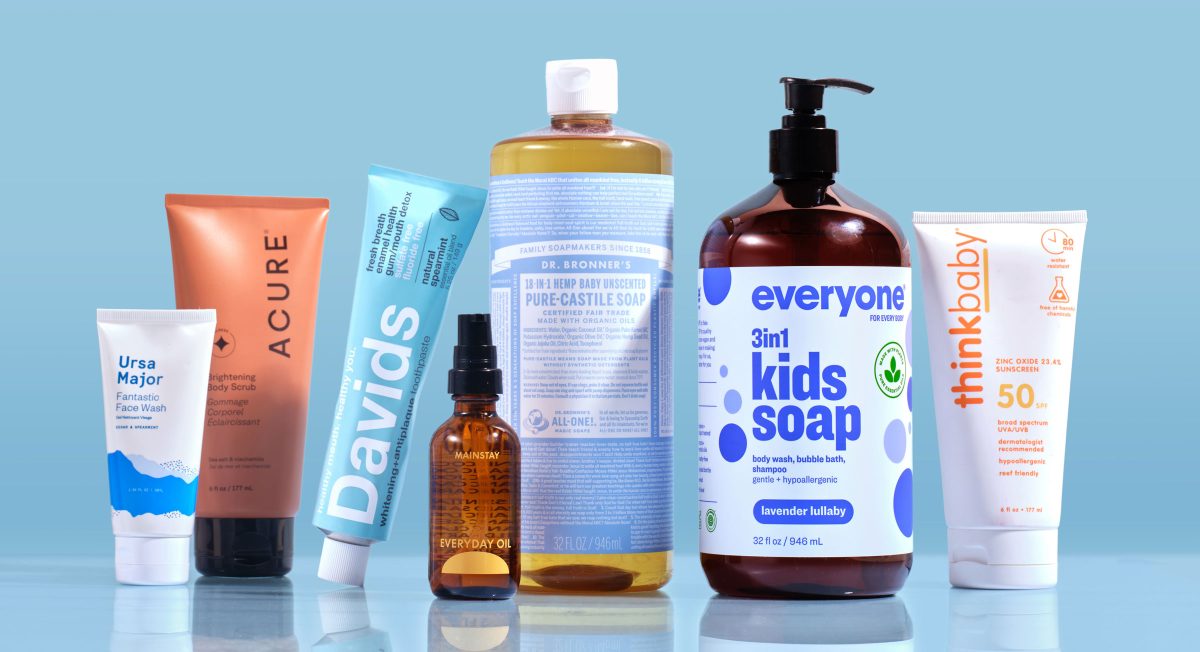
We believe that enhancing your unique beauty shouldn’t mean exposing yourself to harmful ingredients, that your nightly skincare ritual should truly support your skin’s health, and that the shampoo in your shower doesn’t always need to come in a single-use plastic bottle.
Our approach to effective beauty and body care involves three non-negotiables: safety, transparency, and sustainability. While conventional personal care products are filled with questionable ingredients, ours never are; we only carry cruelty-free products formulated with ingredients that are effective and safe for both personal health and our environment, and we prioritize brands that carry trusted certifications such as Leaping Bunny, Organic, Fair Trade, and EWG Verified.
The brands we allow must provide transparency around their ingredient sourcing and manufacturing processes, and we require screening processes and extra testing if a product contains any ingredients known to be at risk for contamination, heavy metals, or sourcing concerns. The extra care we put into our assortment equals a better beauty, bath, and body care routine for you.
What We Leave Out: Breaking Down Our Ingredient Restrictions
Before we add a product to our virtual shelves, we carefully review its makeup against our list of 1,000+ restricted ingredients. Placing restrictions means we will allow certain ingredients only if they’re used within safe concentrations. And in many cases, we go further to ban certain ingredients outright. Here’s an overview of the types of ingredients we restrict and a few examples of those that end up on our “never” list.
Emollients & Moisturizers
Emollients and moisturizers work together to soften and hydrate the skin, and to support the skin barrier so moisture doesn’t escape. Emollients fill in tiny cracks between skin cells; moisturizers include multiple types of ingredients that increase skin hydration. While many of these cornerstone skincare ingredients are safe and well-tolerated, some heavy occlusives (such as petrolatum) may be contaminated with polycyclic aromatic hydrocarbons (PAHs), which are well-known carcinogens produced from things like fossil fuels. We restrict petrolatum, as well as other common emollients and moisturizers like dromiceius (emu) oil, equine oil, mineral oil, and nylon-12.
For moisturization from coconut oil and beeswax — not petrolatum-based moisturizers — try: Burt’s Bees Baby Multipurpose Healing Ointment
To care for skin using ethically sourced cocoa butter and shea butter, try: Weleda Skin Food Body Butter
For hydration from shea butter and argan oil, not emollients like equine oil, try: Three Ships Radiance Grape Stem Cell + Squalane Ultra-Hydrating Cream
For skincare from plant-based oils and beeswax that you can trust even on gentle baby skin, try: Dr. Bronner’s Magic Balm, Unscented
UV Filters & Protectants
UV filters and protectants are ingredients added to skincare and sunscreens to protect the skin from ultraviolet (UV) radiation. There are two types of sunscreens: chemical and mineral. Chemical sunscreens are designed to be absorbed into the skin, and some studies show that the chemicals used in these products can be found in the bloodstream. Mineral sunscreens, on the other hand, create a physical barrier on the skin’s surface that reflects UV rays and are available in non-nano forms for potential environmental benefit — and they’re the only types of sunscreen that we allow at Thrive Market. We also go so far as to restrict potentially harmful UV filters and protectants like benzophenone, oxybenzone, and para-aminobenzoic acid (PABA).
For mineral-based UV protection that’s gentle enough for the skin on your face, try: All Good SPF 30 Sport Sunscreen Spray
To protect skin from the sun using non-nano zinc oxide — and never ingredients linked to endocrine disruption — try: ACURE Mineral Sunscreen SPF 50
Preservatives & Antimicrobials
Parabens are chemical preservatives used to extend shelf life in everything from cosmetics to shampoo. Similarly, antimicrobials also extend the shelf life of personal care products by preventing mold and bacteria from growing inside these products. Unfortunately, parabens like butylparaben, methylparaben, and propylparaben are controversial due to their ability to mimic estrogen in the body, which can disrupt hormonal balance. Other parabens and antimicrobials — like chlorphenesin, triclosan, and methylchloroisothiazolinone (MCI) — are classified as endocrine disruptors and have the potential to cause skin irritation and allergic reactions. Instead, we only allow safer alternatives like rosemary extract, tea tree oil, and potassium sorbate to help keep mold and bacteria away.
For nourishing skincare with rosemary extract and vitamin E instead of potentially harmful preservatives, try: Babo Botanicals Moisturizing Miracle Cream
To soften kids’ skin with a lotion containing safer preservatives, such as potassium sorbate and ascorbic acid, try: Alaffia Kids Body Lotion, Lemon Lavender
To switch to a mascara made without conventional preservatives like methylparaben, try: Mineral Fusion So Classy Volume Mascara, Black
Plasticizers
These chemicals are often used in products like nail polish, shampoo, or hairspray to help them create a film on hair or nails. One common plasticizer that we don’t allow at Thrive Market is dibutyl phthalate, a known endocrine disruptor that can cause developmental and reproductive harm and is banned in cosmetics in the European Union.
For all-day hold for your hairstyle with alternative plasticizers like PVP/VA Copolymer, try: Giovanni Hair Styling Foam or Andalou Naturals Sunflower & Citrus Brilliant Shine Hair Spray
Chelating Agents, pH Adjusters & Stabilizers
Chelating agents and stabilizers are ingredients in personal care products that help formulas extend a product’s shelf life and maintain its effectiveness over time. Two chelating agents that cause concern are disodium EDTA and tetrasodium EDTA, which can be skin irritants and disrupt the skin barrier, potentially allowing other chemicals to pass through the skin. We don’t allow these, instead opting for plant-based compounds like citric acid and sodium gluconate.
For organic soap made with citric acid, try: Dr. Bronner’s Pure-Castile Magic Bar Soap, Lavender
To combat dark spots and brighten skin using gentle, organic tromethamine, not irritating adjusters or stabilizers, try: Hero Cosmetics Lightning Swipe
For an all-purpose lotion made with safer sodium phytate and citric acid, try: Everyone Nourishing Lotion, Unscented
Solvents & Carriers
Solvents are ingredients that ensure products (like nail polish) stay smooth, stable, and evenly mixed; carriers are similar ingredients that transport active ingredients into the skin or evenly deliver fragrance. One potentially harmful solvent is acetone, a man-made chemical that is extremely drying to the skin and nails and can be a strong respiratory irritant. Other common solvents and carriers, such as C13-14 isoparaffin, can be contaminated with polycyclic aromatic hydrocarbons (PAHs), which are known carcinogens. Perfluorodecalin, another skincare solvent, belongs to the PFAS family of chemicals, which are linked to a variety of health problems, such as increased risk of cancer. Instead of these questionable ingredients, we look for soy-based solvents and plant-derived ingredients that work just as well — without the health concerns.
To moisturize skin with apricot kernel oil and jojoba seed oil instead of conventional solvents, try: Weleda Birch Cellulite Body Oil
For a hydrating night cream made with caprylic triglycerides and squalane, try: Derma E Hyaluronic Acid Hydrating Night Cream
For an at-home mani-pedi, opt for an acetone-free polish remover like this one: Mineral Fusion Nail Polish Remover
Antioxidants
Antioxidants are used in cosmetics, fragrances, and skincare products to help slow the oxidation process and prevent the product from going bad. Unfortunately, common antioxidants like BHT (butylated hydroxytoluene) and BHA (butylated hydroxyanisole) are linked to a variety of health concerns: BHA is considered a possible human carcinogen by the International Agency for Research on Cancer (IARC), and both have been linked to endocrine disruption and allergic reactions. Whenever possible, we prioritize naturally-derived preservatives like vitamin E (tocopherol) or plant extracts.
For a hydrating, protective facial balm with rosemary leaf extract instead of BHA, try: Attitude Baby Leaves Face & Cheek Balm Stick
To moisturize the face using green tea extract and Vitamin E (Tocopherol), not conventional antioxidants, try: Mad Hippie Face Cream
A Note on Fragrance
Synthetic fragrances are added to a myriad of personal care products to create or enhance their scents. While we prefer natural fragrances whenever possible, we do allow synthetic fragrances in some cases — only under safe uses. These also offer an option for those who have sensitivities to the fragrance allergens found naturally in essential oils. If “fragrance” or “parfum” is listed on a product label, we verify that it is cruelty-free and meets the strict standards of the International Fragrance Association (IFRA). Any synthetic fragrances must also be formulated without the banned ingredients mentioned above, including parabens, phthalates, nitromusks or polycyclic musks, PTFE/PFOA, acetaldehyde, acetonitrile, methylene chloride, benzalkonium chloride, acetone, ethylenediaminetetraacetic acid (EDTA), bisphenol A (BPA), butylated Hydroxyanisole (BHA), butylated hydroxytoluene (BHT), butoxyethanol, and methyl cellosolve.
For an invigorating scent from earthy peppermint and vetted fragrance, try: Ayéya Traditional African Black Bar Soap in Reset
To banish body odor and give skin a citrus scent using only natural essential oils, try: EO Deodorant Spray, Citrus
For total-body moisturization with a relaxing scent from real lavender oil, try: The Honest Co. Calm Face & Body Lotion, Lavender
Learn More About Our Quality Standards
- Behind the Scenes With the Team That Guides Our Industry-Leading Product Standards
- A Trip to the Biodynamic Gardens Where Weleda Makes Their Hand-Harvested Skincare Products
- Clean Beauty is for Everyone. That’s Why We Made f.a.e.™
- Our Industry-Leading Quality Standards: Seafood
- Our Industry-Leading Quality Standards: Meat & Poultry
- Our Industry-Leading Quality Standards: Beauty, Bath & Body Care